
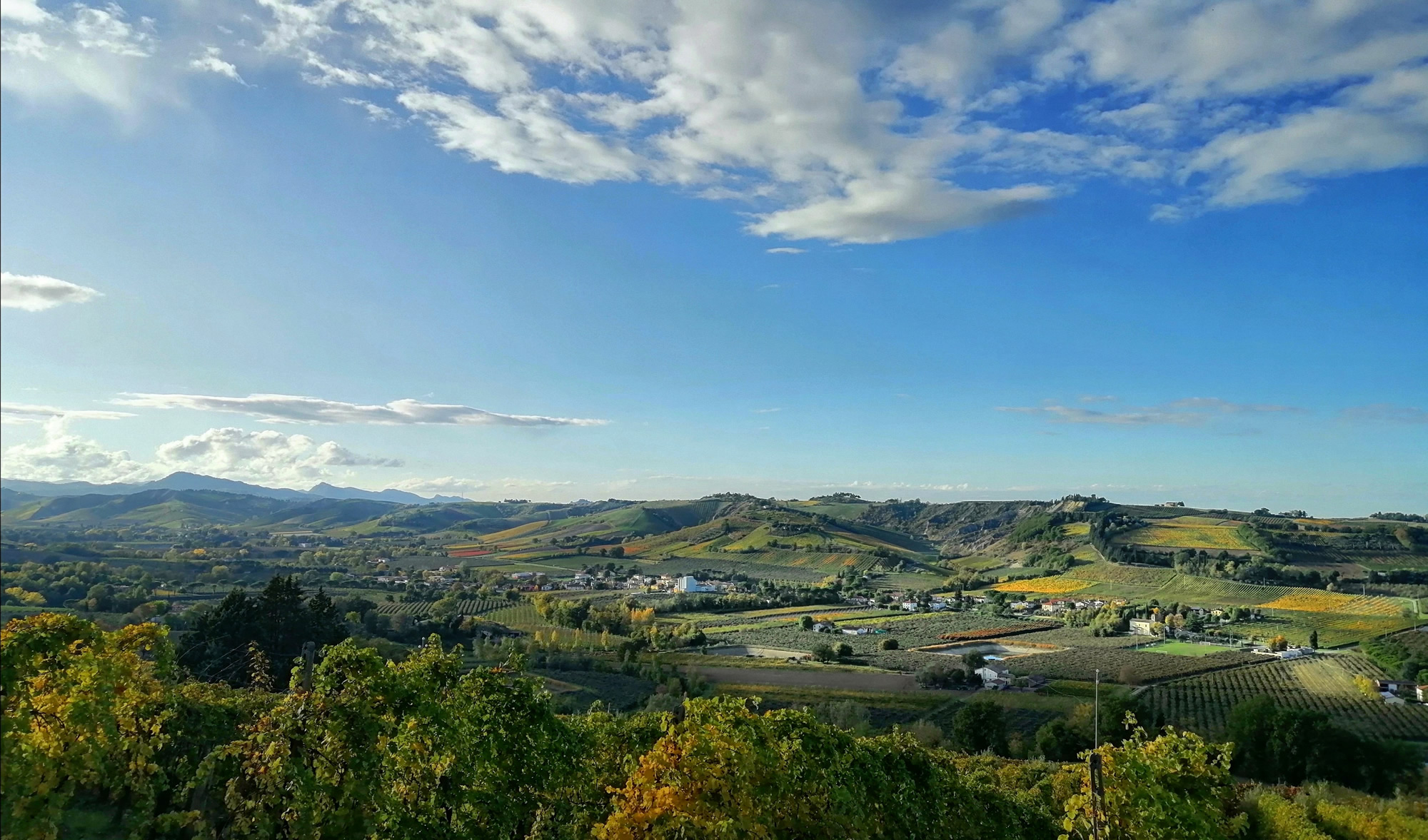
The Marzeno.
The smallest and oldest subzone of Romagna DOC.
A name that comes from Rome. A wine that comes from here.
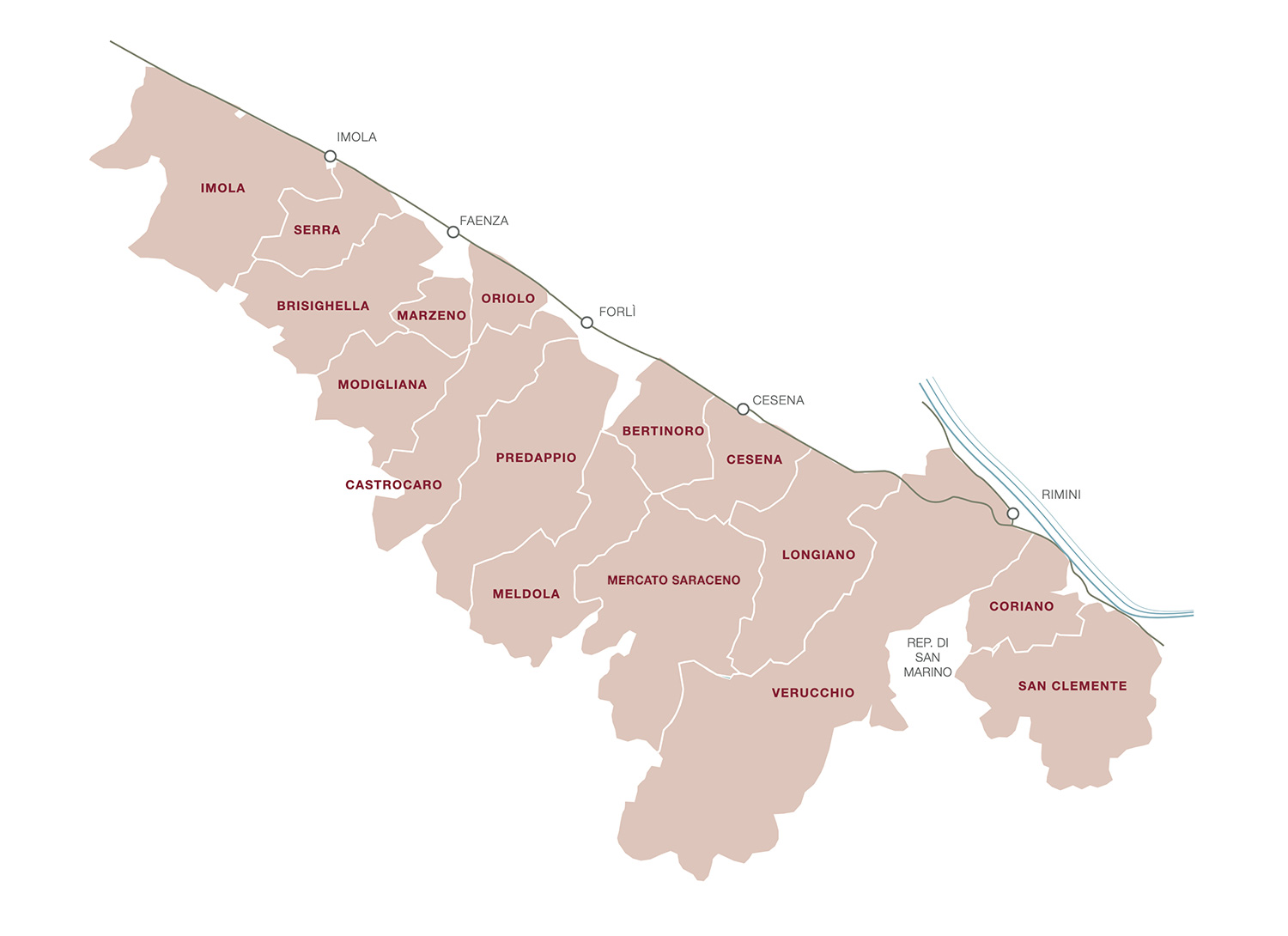
On the border between
Faenza and Brisighella,
in the Faenza Apennines.
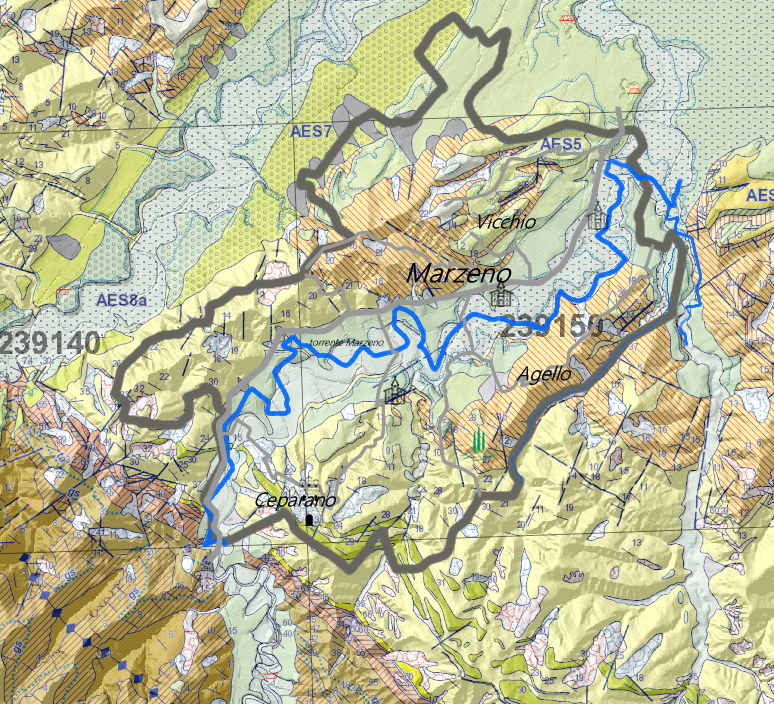
Marzeno is a small Apennine valley that takes its name from the stream of the same name, a tributary of the Lamone. The territory extends between the municipalities of Faenza and Brisighella, in the province of Ravenna, nestled between hills that descend from the Apennines towards the Po plain.
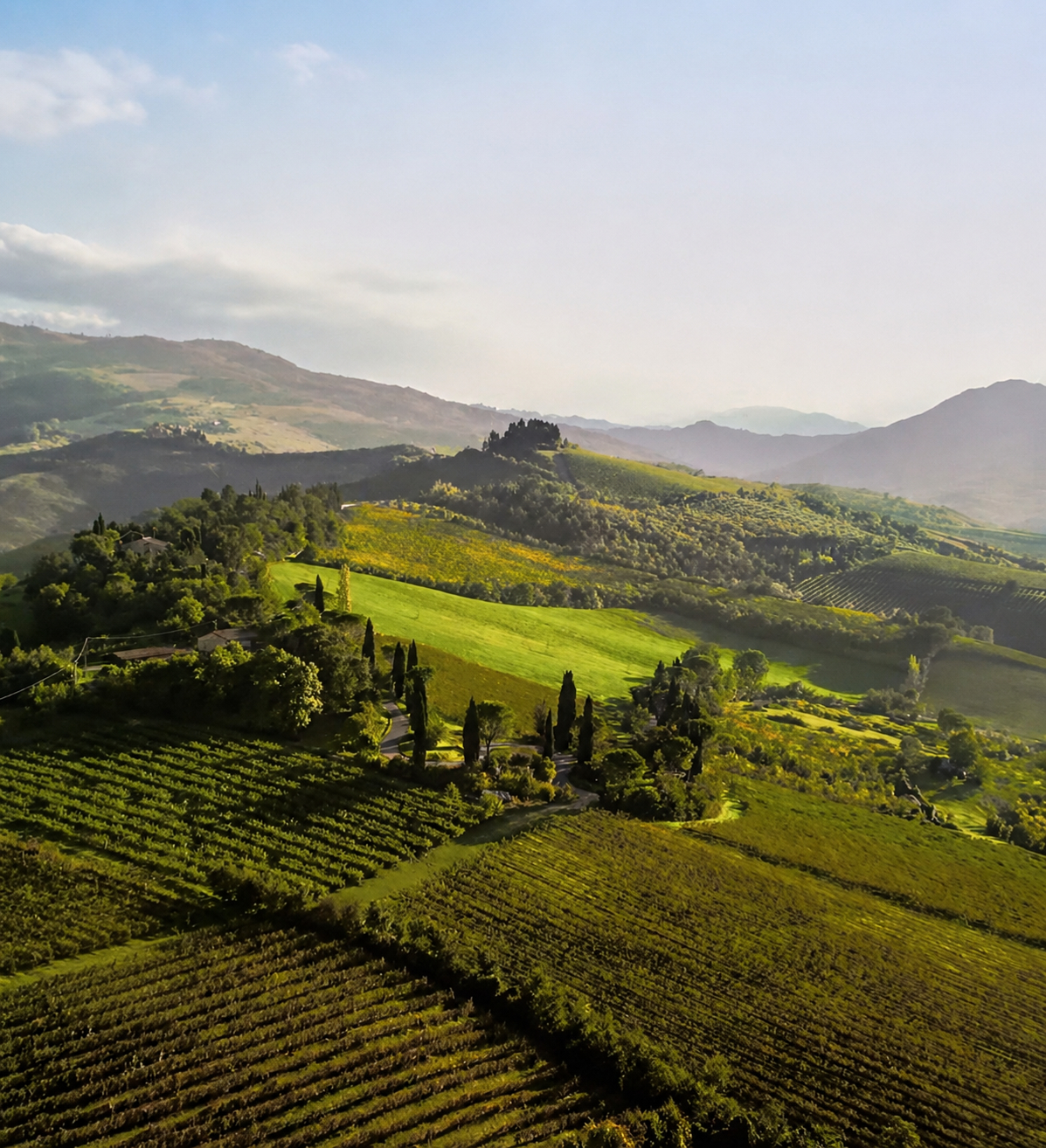
Its position — a valley enclosed on three sides by Apennine ridges and open to the north-east towards the plain — creates unique microclimatic conditions, with marked day-night temperature variation both daily and seasonally.
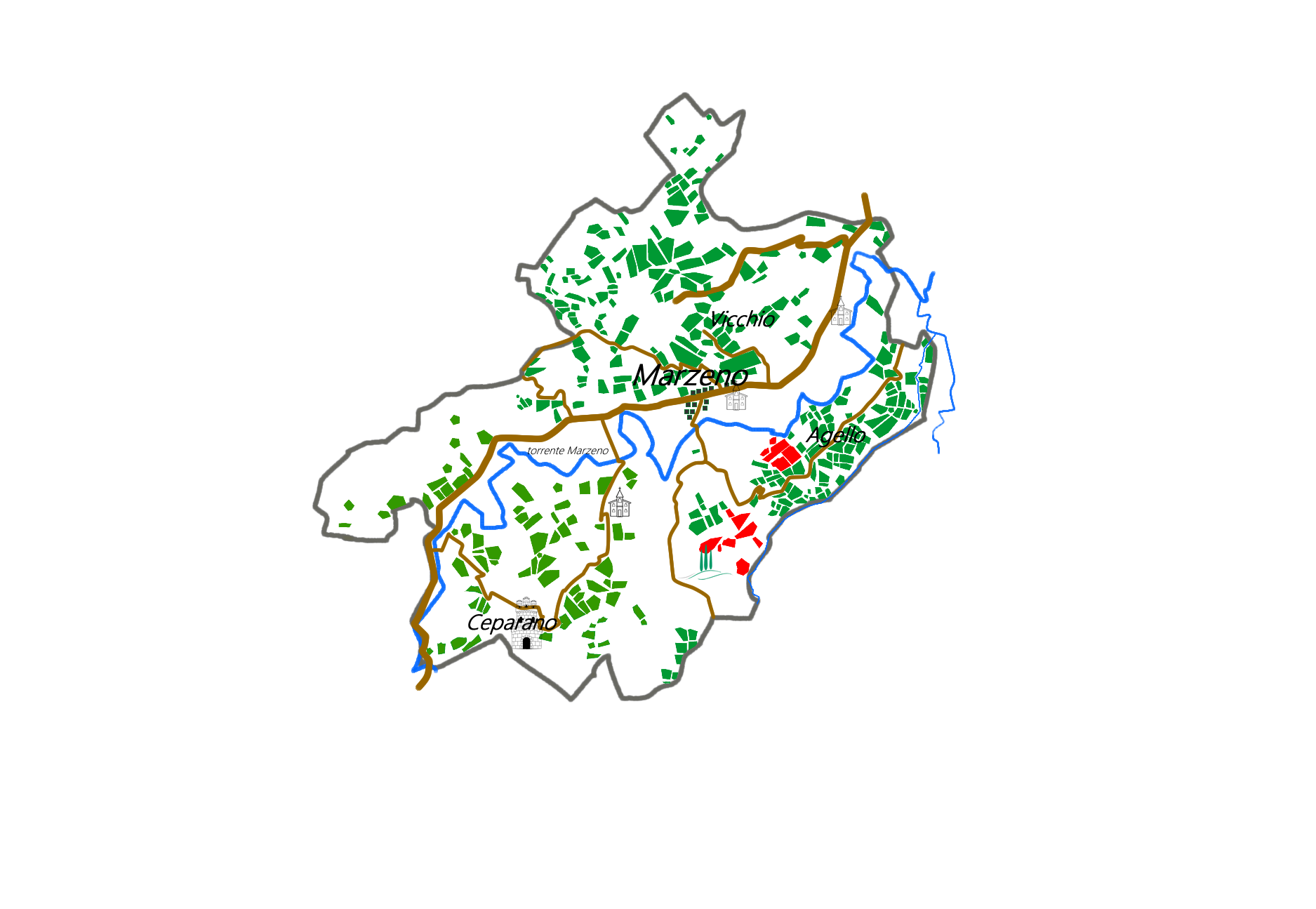
The hamlet of Marzeno, which gives its name to the entire subzone, is administratively divided between the two municipalities. The main wine-growing localities are Agello, Vicchio, Ceparano, Tuliero and Sarna.
From Fundus Marcianus
to 899 AD.
Two thousand years of history.
The name Marzeno is no coincidence — it carries two thousand years of history. Scholars of Faenza place names trace it to the ancient Latin fundus Marcianus, a Roman agricultural estate belonging to the family or prefect Marcius.
The phonetic transition from Latin Marcianus to modern Marzeno is documented: the term locus Marcianus appears explicitly in a document from the Ravenna Archdiocesan Archive dated 14 May 899 — over eleven centuries ago.
«The fertility and excellence of these lands were already known in classical antiquity. In De Re Rustica, Varro mentions the lands of the Faenza territory belonging to L. Marcius, praising their extraordinary productivity and the quality of the vines.»
Marcus Terentius Varro, De Re Rustica — 1st century BC
This historical legacy — from the Roman fundus Marcianus to the 2011 DOC subzone — tells of a territory that has produced wine without interruption for over two millennia.
of the Marzeno toponym
— Ravenna Archdiocesan Archive
The Marzeno stream
and the Collina di Agello.
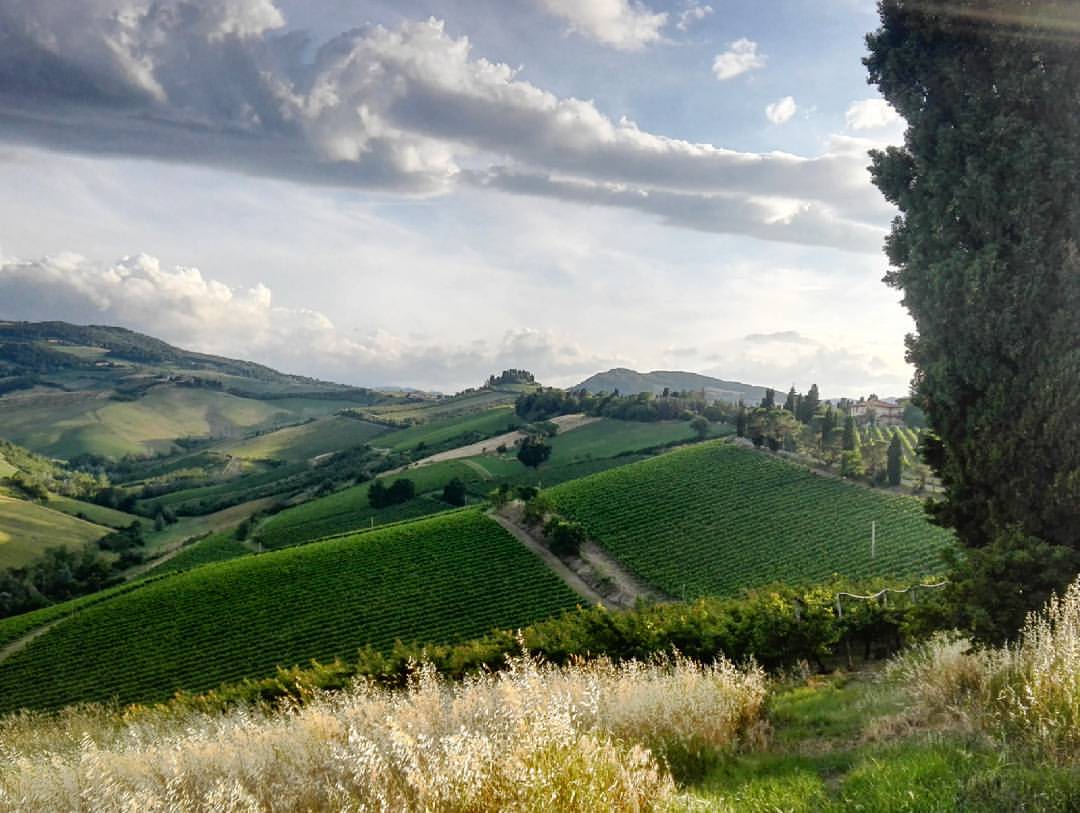
The Marzeno stream flows from south-west to north-east, dividing the territory into two slopes with different exposures and characters. The right bank — where Ca’ di Sopra’s estates are located — is the Collina di Agello, with predominantly east and south-east facing slopes, more clay-rich soils and vineyards between 120 and 240 metres.
The left bank has steeper slopes facing west and north-west, higher altitudes and a greater presence of calanchi — those characteristic clay erosion formations that mark the Apennine landscape of Romagna.
The alternation of these morphologies creates remarkable landscape and viticultural complexity for such a contained area: vineyards on flat ground, on slopes and on ridges, at altitudes ranging from 70 to 350 metres above sea level.
Three soils.
A territorial signature.
The blue-grey clays characterise the central and southern part of the subzone — the heart of the Marzeno, reaching as far as the border with Modigliana. Compact, impermeable and mineral-rich, they force the roots to descend deep in search of water, producing Sangiovese with structure, salinity and long bottle life.
Moving north towards Faenza, the blue clays gradually give way to red clays, which characterise the northern part of the subzone. More oxidised soils, ranging in colour from ochre to brick red, with greater drainage capacity. They give Sangiovese more immediate fruit character and a softer structure.
Within the blue clays, limestone outcrops of the Romagnola Spungone emerge: the hill of Ceparano and the Monti Torre and Castellaccio — reaching 500 metres a.s.l. and forming a natural outpost towards the higher Apennines. This formation extends through the territory as far as Bertinoro, providing minerality and drainage where the clays would otherwise be impermeable.
Sangiovese.
But not like anywhere
else in Romagna.
Sangiovese is Romagna’s grape variety par excellence — but Marzeno gives it an imprint that distinguishes it from the rest of the denomination. The compact clays, altitude, temperature variation and the presence of the Spungone produce a Sangiovese with precise and recognisable characteristics.
Vibrant acidity — cool nights and altitude preserve the grape’s natural acidity even in the hottest vintages, giving the wines freshness and tension.
Marked salinity — the mineral richness of the clay-limestone soils transfers directly into the glass, with a saline persistence that is the territorial hallmark of Marzeno.
Fine-grained tannins — not aggressive, but present and well integrated. Structure without harshness, capacity for bottle evolution.
Longevity — a characteristic common to the best wines of the territory: Marzeno Sangiovese ages well, improving over the first five to ten years and holding beyond.
Recognised in 2011.
One of the smallest
subzones in Italy.
Marzeno was recognised as a Romagna DOC subzone in 2011, as part of the denomination reform that identified and delimited the highest-vocation wine areas in the region.
With its 2,890 total hectares and 435 under vine, it is one of the smallest DOC subzones in the entire Italian landscape — a size that guarantees a precise territorial identity and a necessarily limited production.
The production regulations require a minimum of 95% Sangiovese and recognise two typologies:
Romagna DOC Marzeno Sangiovese — may be released from the 1st September following the harvest. The entry-level typology, expressing the direct and territorial character of Marzeno Sangiovese.
Romagna DOC Marzeno Sangiovese Riserva — requires a minimum of 24 additional months of ageing compared to the base typology. A wine of structure and longevity, designed to express Marzeno in its most complete form.